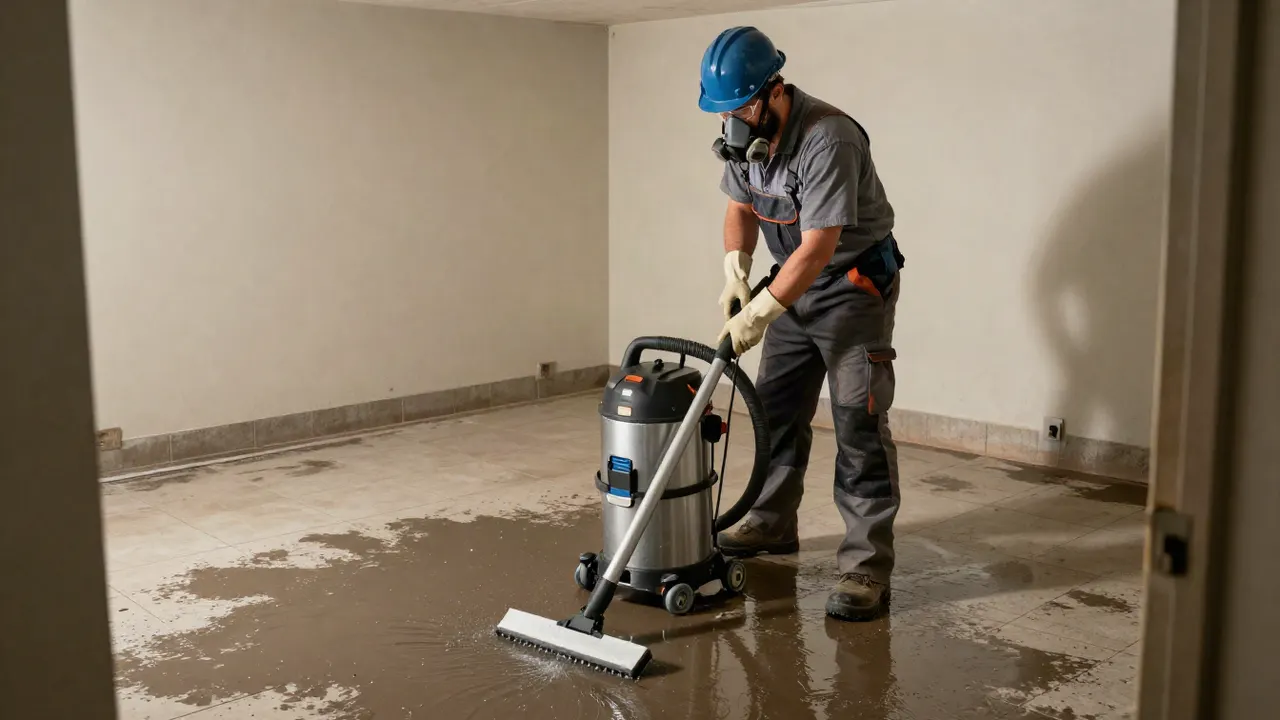
What to do while waiting for emergency water removal in Hyattsville
Water spreading across your floor right now? Here are the exact steps to take while waiting for emergency water removal in Hyattsville - and the mistakes that cost homeowners thousands.
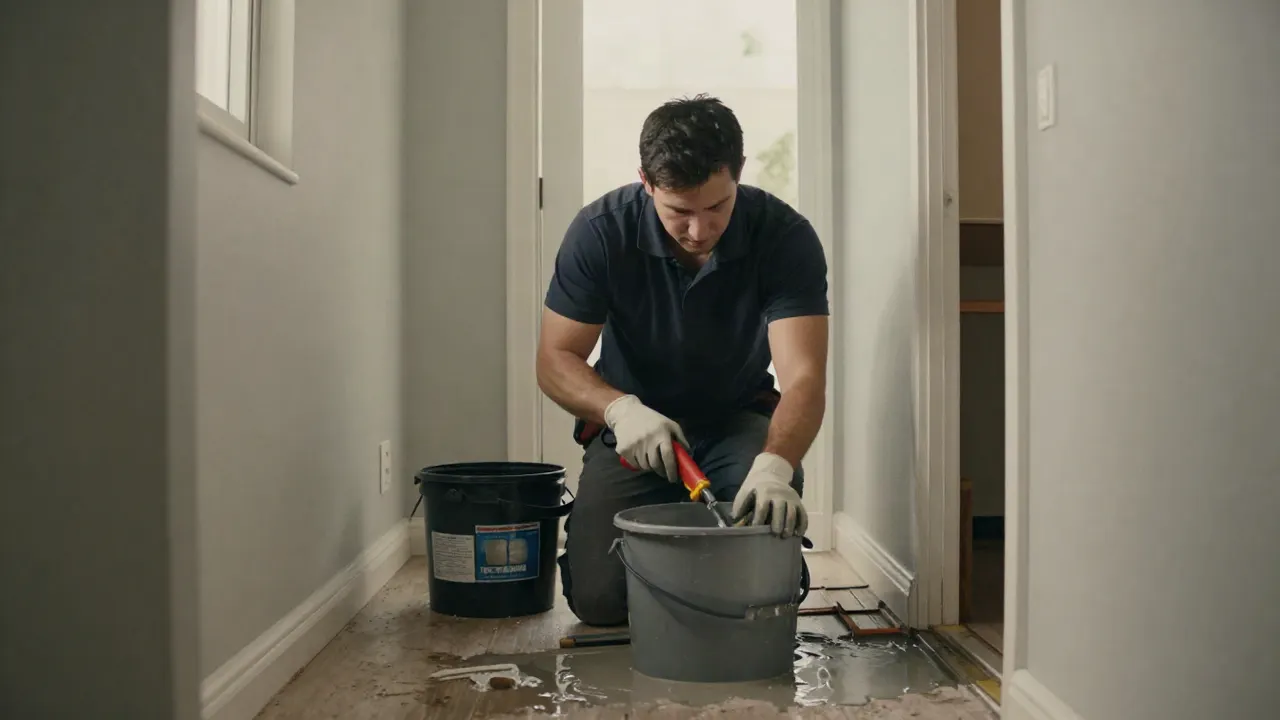
While you wait for emergency water removal in Hyattsville, shut off the water supply, cut power to any wet rooms, and start moving valuables off the floor. Those three moves in the first ten minutes do more to limit damage than anything else you can do before the crew arrives.
What follows is the same sequence we walk Hyattsville homeowners through on the phone while our trucks are rolling - shut-off locations, what is safe to touch, what to photograph, and the mistakes that turn a $1,200 extraction into a $9,000 rebuild.
Shut off the water and kill the power first
Shutting off the water and the power is the first thing to do during water damage in Hyattsville, because every minute the source stays live adds roughly a gallon of water per minute to a burst supply line. Find the main shut-off valve and turn it clockwise until it stops.
In most Hyattsville homes - especially the 1920s-1950s bungalows and colonials around Kirkwood and Avondale - the main valve sits in the basement near the front foundation wall, usually within a few feet of where the water line enters. In newer townhomes near University Town Center, look in the utility closet or the garage wall. If you cannot find it, call the City of Hyattsville water department and ask them to shut it at the curb.
Then kill the power. Go to your breaker panel and switch off every circuit that serves a wet room. If the panel itself is standing in water or you have to stand in water to reach it, do not touch it - call an electrician and wait outside. Water and live 120-volt circuits do not mix, and this is the single most common way people get hurt during a home flood.
If the water is coming from a fixture, not the main line
A toilet or sink supply line has its own shut-off valve underneath or behind the fixture. Turn it clockwise. For a water heater leak, close the cold-water inlet valve on top of the tank and switch the breaker off. For a washing machine hose, close the valves behind the unit.
Is it safe to stay in your home while you wait?
It is usually safe to stay in your home while waiting for water removal in Hyattsville if the water is clean, contained to one room, and the power is off in that area - but you should leave immediately if the water is Category 3 (sewage, ground water, or anything that has sat more than 48 hours).
Category 3 water carries bacteria and viruses. If a sewage backup pushed water up through a floor drain or a basement toilet, that water is contaminated. Do not wade in it, do not let pets or kids near it, and do not try to vacuum it up with a shop vac. That is a job for Sewage Backup Cleanup Hyattsville MD with proper PPE and disinfection, not a homeowner with a mop.
Leave the house and call from outside if any of these are true:
- Water is within a foot of outlets, the breaker panel, or a furnace.
- You smell gas, or you hear hissing near the water heater.
- The ceiling is sagging or bulging - a ceiling holding 20-30 gallons of trapped water can drop without warning.
- The water is grey or black, or it came up through a drain.
- Anyone in the home has asthma, a compromised immune system, or is pregnant.
If none of those apply, stay put, keep the affected rooms closed off, and open windows if the outdoor temperature is above 50°F. Hyattsville humidity in November runs high enough that trapped moisture starts feeding mold growth within 24 to 48 hours.
Stop the spread: the first 30 minutes matter most
Stopping the spread means blocking water from reaching carpet edges, baseboards, and the rooms below, because water wicks sideways through padding and downward through floor assemblies faster than most people expect. A wet carpet pad can push moisture six to ten feet past the visible wet spot.
Here is the order we recommend:
- Roll up towels or old blankets into a dam at the doorway of the wet room.
- Pull up the carpet at the nearest corner and fold it back so the pad is exposed. If the pad is soaked, cut a 12-inch square out and set it aside - you will want it for the insurance adjuster.
- Lift furniture legs onto aluminum foil or plastic wrap. Wood and metal both stain carpet and finish when they sit in water for hours.
- Open interior doors to the dry parts of the house so air can move, but keep the wet room closed off from bedrooms.
- If the water is in a basement, check the floor drain. If it is clogged, clear it so water has somewhere to go.
Do not run your central HVAC system while the house is wet. It will pull moisture into the ducts and spread it to every room. Turn the thermostat to OFF, not AUTO.
What you can safely move, and what you should not touch
Move anything that is portable and dry-ish: electronics, paperwork, photos, medications, area rugs, small furniture, and anything on the floor of an adjacent dry room. Get them to a dry, elevated surface - a table, a counter, or out of the house entirely.
Leave these alone:
- Anything plugged in. Unplug only if the outlet and your hands are dry and the outlet is above the water line.
- Pianos, gun safes, and large appliances. These need professional handling and, in the case of a piano, a specialist.
- Wet drywall and baseboards. Do not pull them off. The restoration crew needs to see the water line for documentation, and cutting the wrong spot can void an insurance claim.
- Wet documents and photos. Do not spread them out to dry. Freeze them in a zip bag and let a professional handle the drying - that is part of Content Cleaning and Pack-Out Hyattsville MD, and it is the difference between saving and losing family records.
If you have a shop vac and the water is clean, you can pull up standing water from a hard floor. Do not use it on carpet - it will not get the pad dry and it can burn out the motor. Real Carpet Water Extraction and Drying Hyattsville MD uses truck-mounted units that pull water from the pad and subfloor, not just the surface.
Document everything before the crew arrives
Documenting the damage before anything is moved or dried is the single best thing you can do for your insurance claim, because adjusters work from photos and measurements, not memory. Spend ten minutes with your phone.
Photograph:
- The source - the burst pipe, the failed supply line, the roof leak, the backed-up drain.
- The water line on walls, baseboards, and furniture legs. Put a ruler or a coin next to it for scale.
- Every affected room from the doorway, wide shot, then close-ups.
- Serial numbers and model plates on damaged appliances.
- Any pre-existing damage, so it does not get blamed on this event.
Then write down the date, the time you discovered the water, and the time you shut it off. Your insurance company will ask for all three. If you rent, call your landlord in writing - text or email - and keep the timestamp.
Most homeowners policies in Maryland cover sudden and accidental discharge, which is what a burst pipe is. They typically do not cover gradual seepage or long-term leaks. That distinction is why the photos and the timeline matter.
How long does emergency water removal take to arrive in Hyattsville?
Emergency water removal in Hyattsville typically arrives within 60 to 90 minutes of your call, and often faster if you are inside the Beltway near Downtown Hyattsville or the Arts District. We run 24/7 crews out of the Route 1 corridor, so travel time from dispatch to your driveway is usually 20 to 40 minutes.
What slows arrival down is not distance - it is access. If you are in a rowhouse with no street parking, or in a building near the University of Maryland campus on a game day, tell the dispatcher on the phone. We will route around it.
Once we are on site, the extraction itself takes 2 to 6 hours for a typical single-room loss. A finished basement with carpet and pad can run 6 to 10 hours. Then the drying equipment runs for 3 to 5 days, which is a separate phase - that is Structural Drying Hyattsville MD, and it is what actually prevents mold.
Common mistakes homeowners make while waiting
The most expensive mistakes during a home flood are the ones that feel helpful in the moment. Here are the ones we see most often in Hyattsville.
Running a box fan on wet carpet
A household fan blows surface moisture around and pushes it into the walls. It does not dry the pad or the subfloor. Professional drying uses high-velocity air movers positioned at a specific angle to the floor, plus Dehumidification Services Hyattsville MD to pull the moisture out of the air. Without the dehumidifier, you are just moving water from the floor to the walls.
Waiting until morning
Mold can begin colonizing wet drywall and framing in 24 to 48 hours. Water wicks up drywall at roughly one inch per hour. A leak discovered at 9 p.m. and addressed at 8 a.m. has already climbed 11 inches up the wall.
Throwing away wet items
Do not trash anything until the adjuster has seen it. Even a soaked mattress or a ruined rug has documented value in the claim.
Assuming the water is clean
Water from a supply line is clean. Water from a drain, a toilet, a washing machine discharge, or any ground source is not. Treat anything that came up from below as contaminated.
Not telling the crew about the source
If the water came from a roof leak, that is a different job than a burst pipe. Roof Leak Water Damage Restoration Hyattsville MD involves checking the attic deck and insulation, not just the ceiling below. Tell the dispatcher exactly where the water started, not just where you see it.
When to call a professional
Call a professional the moment water touches drywall, carpet pad, or a finished basement floor - those materials hold moisture for days and will not dry out with towels and fans. If the water is clean, shallow, and confined to a tile or concrete floor, you can handle it yourself. Anything else needs equipment you cannot rent at a hardware store.
Our team handles the full chain: extraction, drying, moisture mapping, and repairs. We do Residential Water Damage Restoration Hyattsville MD for houses and townhomes, and Commercial Water Damage Restoration Hyattsville MD for the shops and restaurants along Route 1. If you are not sure which one you need, call and we will tell you straight.
One call, one crew, one invoice. We quote the job before we start, and we bill your insurance directly where the policy allows.
Frequently Asked Questions
What should I do while waiting for emergency water removal in Hyattsville?
Shut off the water at the main valve, cut power to wet rooms at the breaker, and move valuables off the floor. Photograph everything before you move it. Keep the wet area closed off and do not run the HVAC. Then wait for the crew - most of the work before they arrive is about stopping the spread, not drying.
Should I turn off water while waiting for emergency water removal in Hyattsville MD?
Yes - always. Turn the main valve clockwise until it stops, or close the fixture valve if the leak is at a toilet, sink, or water heater. If you cannot find the main, call the City of Hyattsville water department to shut it at the curb. Every minute the source runs adds about a gallon of water to the damage.
Is it safe to stay in my home while waiting for water removal in Hyattsville?
Usually yes, if the water is clean, contained to one room, and the power is off in that area. Leave immediately if the water came from a drain or sewage backup, if it is within a foot of outlets or the breaker panel, or if a ceiling is sagging. Category 3 water is a health hazard.
How long does emergency water removal take to arrive in Hyattsville?
Typically 60 to 90 minutes from your call, and often 20 to 40 minutes of drive time from the Route 1 corridor. Extraction itself takes 2 to 6 hours for a single room, 6 to 10 hours for a finished basement. Drying equipment then runs for 3 to 5 days.
Can I just use a shop vac and fans instead of calling a crew?
Only for clean water on a hard floor, and only if you can get it up within an hour. A shop vac will not dry carpet pad, subfloor, or drywall. Household fans push moisture into walls instead of removing it. If water reached drywall or carpet, you need truck-mounted extraction and commercial dehumidifiers.
Get help with Water Damage in Hyattsville
If water is on the floor right now, call us. We run 24/7 out of Hyattsville and we will tell you on the phone what to do before we get there.
Call +1 (866) 327-0438 and we will dispatch a crew to your address.