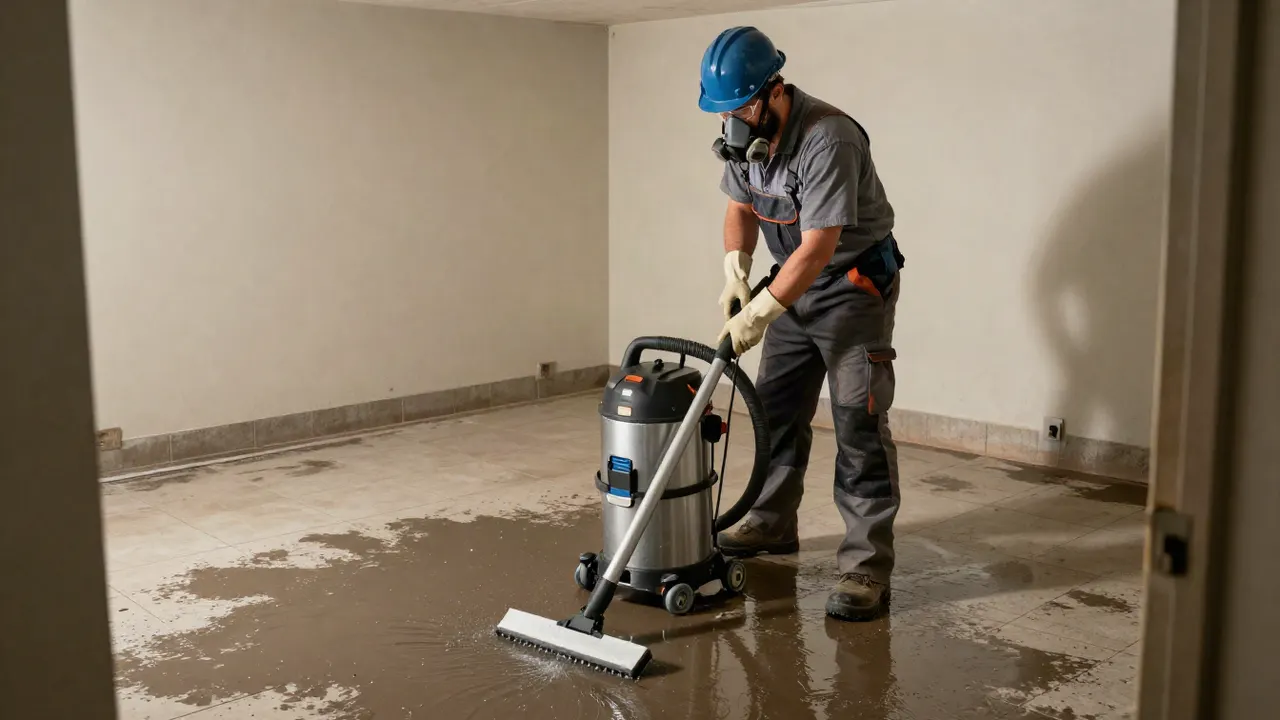
Why spring thaws cause crawl space water problems in Hyattsville
Spring thaws cause crawl space water problems in Hyattsville because saturated soil, frozen ground, and aging drainage push meltwater under homes before it can drain away.
Spring thaws cause crawl space water problems in Hyattsville because the ground is still frozen when the first warm rain arrives, so meltwater and rain cannot soak downward and instead pushes sideways under your foundation. That water finds the path of least resistance - cracks, unsealed vents, and the dirt floor of your crawl space - and pools there for days or weeks before you notice.
We handle these calls every March and April across Hyattsville, and the pattern is almost identical each year. Below we explain what happens underground, the warning signs to watch for, how to prevent it, and what crawl space water removal actually costs in 2026.
The short answer: why spring thaws cause crawl space water problems in Hyattsville
Spring thaw crawl space water problems in Hyattsville MD are a soil-drainage issue, not a plumbing issue. When the top 12 to 18 inches of soil are still frozen but the air temperature climbs into the 50s, rain and snowmelt have nowhere to go. They run along the surface, collect against your foundation, and seep through the first opening they find.
Hyattsville sits on a mix of clay-heavy soils and older fill dirt, especially in neighborhoods built before 1960. Clay holds water like a bowl. Once it is saturated, every additional gallon from a spring storm has to go somewhere, and the crawl space is usually the lowest point on the property.
That is the whole mechanism. The rest of this article is about what to do with it.
What happens underground when Hyattsville thaws out
Hyattsville thaws from the top down, and that order matters. The surface soil warms first, usually in late February or early March, while the subsoil stays frozen for another two to four weeks. Water cannot percolate through frozen ground, so it spreads laterally.
Three things happen at the same time:
- Hydrostatic pressure builds against your foundation walls. Water weighs 62.4 pounds per cubic foot, and saturated soil pushes that weight sideways into any crack wider than a hairline.
- Footing drains clog. Many Hyattsville homes have clay tile or perforated PVC footing drains installed decades ago. Roots and silt block them, so water that used to drain away now sits against the wall.
- The water table rises. In low-lying pockets near the Northwest Branch and along the Anacostia tributaries, the water table can rise 2 to 4 feet in a wet spring, which puts it above your crawl space floor.
You can see this in real time. If your sump pit fills within an hour of a moderate rain, the water table is already at your slab. If it fills within a day, you have a drainage problem uphill from the house.
Why Hyattsville crawl spaces flood more than basements
Hyattsville crawl spaces flood more than basements because they sit lower, vent to outside air, and usually have a bare dirt floor. A basement has a concrete slab and a sump; a crawl space has neither unless someone added them.
Most of the housing stock here falls into three groups:
- Pre-1940 bungalows with pier-and-beam foundations, 18 to 24 inches of clearance, and no vapor barrier.
- Post-war ranches with shallow crawl spaces, often 14 to 18 inches, and original clay footing drains.
- Newer infill construction with encapsulated crawl spaces that work well until a vent or seam fails.
In the older two groups, water enters through the dirt floor itself. You do not need a crack in the foundation - the ground under the house is simply lower than the ground outside it, and water follows gravity. We see this constantly in the older blocks of Water Damage Downtown Hyattsville MD, where homes sit close together and downspouts often discharge within 3 feet of the next foundation.
If your crawl space takes on water every spring, you are not imagining it. The neighborhood was built before modern grading standards, and the drainage has not kept up.
Warning signs you should not ignore in March and April
Warning signs of spring thaw crawl space flooding in Hyattsville Maryland show up inside the house long before you see standing water. The crawl space is out of sight, but it is not out of reach - the moisture travels upward through the floor system.
Watch for these:
- Cupped or buckling hardwood on the first floor, especially near the center of the house.
- A musty smell that gets stronger after rain and fades on dry days.
- Cold floors that feel damp even when the heat is running.
- Condensation on ductwork or on the cold water pipes in the crawl space.
- Pest activity - crickets, silverfish, and termites all move toward moisture.
- Higher heating and cooling bills because wet insulation does not insulate.
If you see two or more of these at once, the crawl space is wet. A $20 moisture meter from any hardware store will confirm it in 30 seconds - anything above 20 percent wood moisture content means active moisture.
We also get calls from homeowners who noticed the problem only after a hardwood floor water damage Hyattsville MD inspection turned up cupping across an entire room. By then the crawl space has usually been wet for weeks.
How to prevent crawl space water in spring Hyattsville
You can prevent most spring thaw crawl space water in Hyattsville with grading, gutters, and a vapor barrier - in that order. Skip the first two and the third one just traps water against your floor joists.
Fix the grade first
The soil around your foundation should slope away at roughly 6 inches of drop over the first 10 feet. In Hyattsville, decades of mulch, leaf litter, and settling have flattened most yards. Rebuild the slope with clean fill, not mulch.
Move water away from the house
Downspouts should discharge at least 6 feet from the foundation, ideally onto a splash block or into a buried drain line. If your downspouts currently dump within 2 feet of the wall, that alone can account for most of your crawl space water.
Seal the crawl space floor
A 6-mil or 10-mil polyethylene vapor barrier over the dirt floor cuts ground moisture evaporation by 80 to 90 percent. Overlap the seams 12 inches and run the plastic 6 inches up the foundation piers. This is the single highest-return fix for a damp crawl space.
Manage the vents correctly
Old advice said to open crawl space vents in summer and close them in winter. That is backwards for our climate. In a wet spring, open vents let humid outside air into a cool crawl space, where it condenses on the joists. Modern practice is to seal the vents and condition the space, or to keep them closed during the wet months.
Add a dehumidifier if needed
If your crawl space reads above 60 percent relative humidity even after the barrier is installed, you need mechanical drying. We install Dehumidification Services Hyattsville MD in crawl spaces throughout the area, sized to the cubic footage of the space rather than the square footage of the house.
One more thing: if you have had water in the crawl space before, get it professionally dried before you seal anything. Trapping moisture under a new vapor barrier is worse than leaving it open. That is what our Crawl Space Water Removal Hyattsville MD service is for - we extract, dry, and verify before any encapsulation goes down.
Common mistakes homeowners make during spring thaw
The most common mistake we see is waiting. Homeowners assume the water will dry on its own once the rain stops. In a Hyattsville crawl space with limited airflow, standing water can take 3 to 6 weeks to evaporate, and mold starts growing in 24 to 48 hours.
Other mistakes:
- Running a box fan in the crawl space. It moves air but does not remove moisture. You need a refrigerant or desiccant dehumidifier rated for the space.
- Putting down a vapor barrier over wet ground. This traps moisture against the joists and accelerates rot.
- Bleaching visible mold. Bleach kills surface mold on non-porous materials but does not penetrate wood. Mold Remediation Hyattsville MD requires physical removal of contaminated material and HEPA filtration.
- Ignoring the source. If the water is coming from a failed footing drain or a broken downspout line, drying the crawl space without fixing the source means you will be back in the same spot next March.
- Assuming insurance covers it. Most homeowner policies cover sudden pipe bursts but exclude gradual groundwater seepage. Check your policy before you assume.
We see the bleach mistake most often. Homeowners spray the joists, the smell goes away for a week, and then it comes back stronger. Mold on wood needs to be removed, not wiped.
When to call a professional
Call a professional when standing water has been in the crawl space for more than 48 hours, when the water is more than 1 inch deep, or when you can smell mustiness inside the living space. Those three conditions mean the damage has already moved past what a shop vac and a fan can fix.
We handle this work every spring across Hyattsville and the surrounding neighborhoods. Our team extracts the water, sets drying equipment sized to the actual cubic footage, monitors moisture daily, and treats any microbial growth before we close the job. We give you a flat price before we start, and we tell you what we found - including whether the source is something a plumber or a landscaper needs to fix.
If you are not sure whether you have a problem, call us anyway. A quick inspection costs you nothing and takes 20 minutes.
Frequently Asked Questions
Why does spring thaw cause crawl space water problems in Hyattsville?
Frozen subsoil blocks downward drainage, so rain and snowmelt run sideways against your foundation and seep into the crawl space. Hyattsville's clay-heavy soil and older footing drains make this worse. The problem peaks in late February through April.
How do I prevent crawl space water during spring thaw in Hyattsville MD?
Regrade the soil to slope 6 inches away over 10 feet, extend downspouts at least 6 feet from the foundation, and install a 6-mil vapor barrier over the dirt floor. Keep crawl space vents closed during wet months. These three fixes prevent most spring thaw water.
Can spring thaw crawl space water cause mold in Hyattsville?
Yes. Mold can begin growing on wet wood within 24 to 48 hours. Hyattsville's humid springs mean a wet crawl space often develops visible mold within a week. Wood moisture above 20 percent is the threshold - anything higher needs professional drying and remediation.
How much does crawl space water removal cost in Hyattsville?
Typical 2026 pricing in Hyattsville runs $1,200 to $3,500 for extraction, drying, and moisture verification, depending on water volume and crawl space size. Mold remediation, if needed, adds $1,500 to $4,000. Most jobs are completed in 3 to 5 days.
Will my insurance cover crawl space water from spring thaw?
Usually not. Most homeowner policies exclude gradual groundwater seepage and surface water flooding. Sudden pipe bursts are typically covered. Check your policy language or call your agent before assuming coverage - the distinction matters.
Get help with Water Damage in Hyattsville
If your crawl space is wet, the clock is running. Every day of standing water means more rot, more mold, and a bigger repair bill.
Call Water Damage Restoration Hyattsville MD at +1 (866) 327-0438 for crawl space water removal and drying across Hyattsville and the surrounding areas. We answer 24/7, and we give you a flat price before we start.