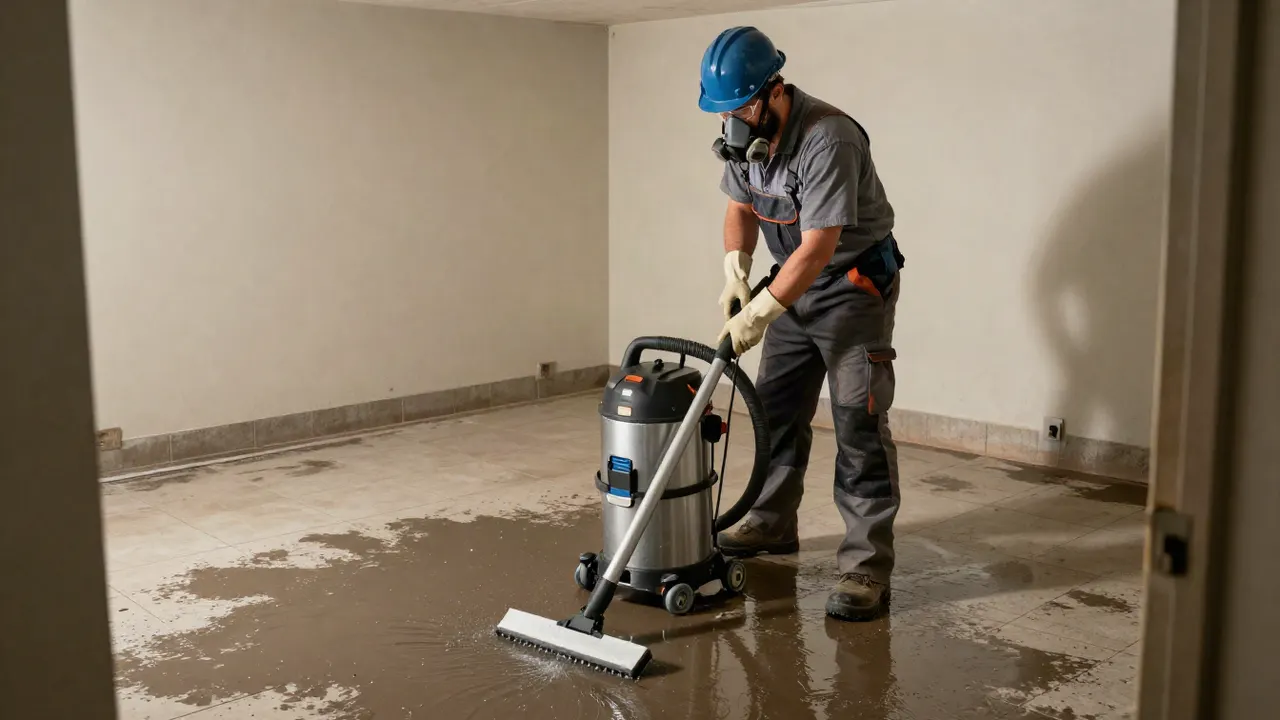
Signs of Hidden Water Damage Behind Walls in Hyattsville
Musty smells, bubbling paint, soft drywall, and rising water bills are the classic signs of hidden water damage behind walls in Hyattsville. Here's how to confirm it.
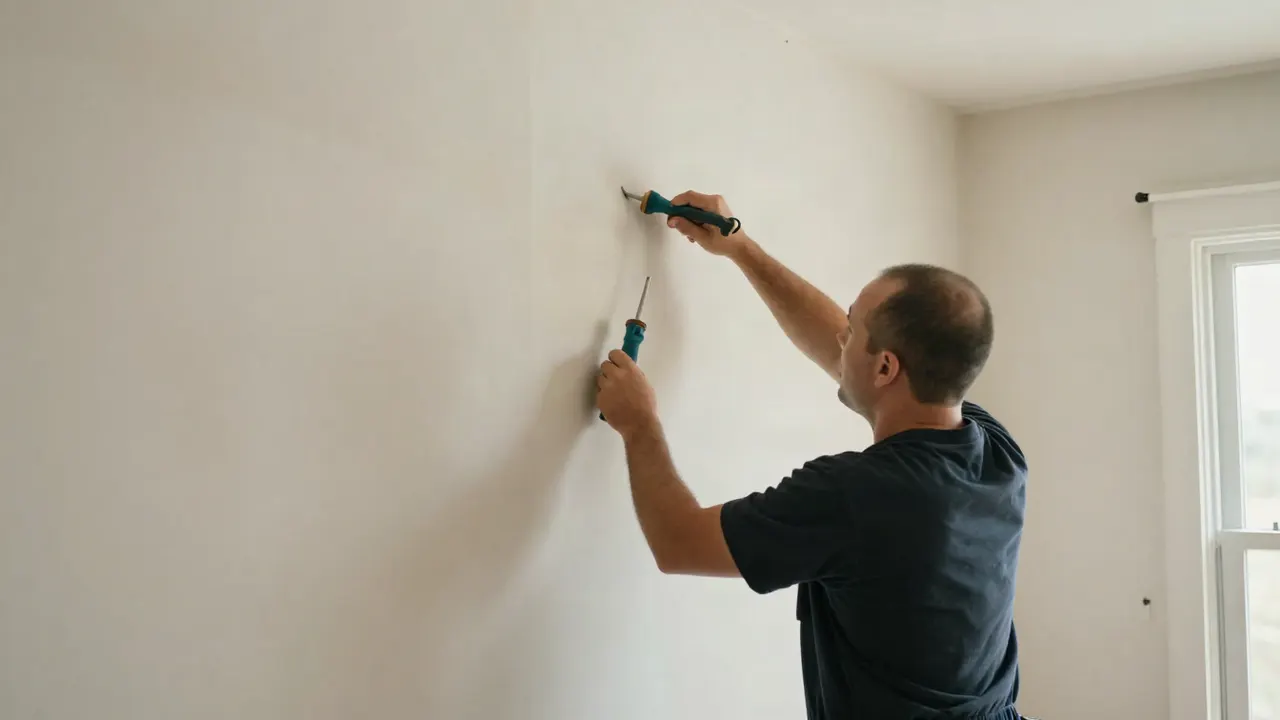
The signs of hidden water damage behind walls in Hyattsville are a musty smell that will not leave, paint that bubbles or peels, drywall that feels soft or spongy, a water bill that jumped with no explanation, and brown or yellow stains spreading on ceilings and baseboards. If you have two or more of those, water is almost certainly sitting inside the wall cavity right now.
Hyattsville's housing stock makes this worse than in most of Prince George's County. The city has roughly 21,000 residents packed into a few square miles of century-old Victorians, post-war brick colonials, and mid-century rentals, and most of those walls hide galvanized steel pipes that have been quietly corroding since the Truman administration. We walk into homes in Water Damage in Downtown Hyattsville every week where a homeowner swore nothing was wrong until the ceiling came down.
Below, we cover how to confirm a hidden leak, where they usually start, what detection and repair cost in 2026, and the mistakes that turn a $900 fix into a $12,000 rebuild.
What Are the Signs of Hidden Water Damage Behind Walls in Hyattsville?
Hidden water damage behind walls in Hyattsville is moisture trapped inside a wall cavity that has not yet broken through the drywall surface, and it announces itself through smell, texture, temperature, and your utility bill long before it shows as a visible stain.
Here is what we tell homeowners to check, in the order the clues usually appear:
- Smell. A damp, earthy, or locker-room odor that gets stronger in the bathroom, kitchen, or basement. If it intensifies after a shower or a rainy week, the source is close.
- Texture. Press the drywall with your palm. Healthy drywall is hard. Damaged drywall gives slightly, like a bruise. Around baseboards, tap with a screwdriver handle and listen for a hollow or dull thud instead of a sharp tap.
- Paint and tape. Bubbling paint, joint tape lifting at the seams, or a chalky white powder (efflorescence) on brick or block walls.
- Temperature. One wall section that feels noticeably cooler or warmer than the rest. Wet insulation loses its R-value fast.
- Stains. Yellow, tan, or rust-colored rings on the ceiling below a bathroom, or dark tide lines along the bottom of a wall.
- Water bill. A jump of more than 1,000 gallons over your normal month with no change in habits points to a supply-line leak.
- Sound. A faint hiss or drip inside the wall when every fixture in the house is off.
One sign alone can be a false alarm. Three together is a leak.
How Do I Know if There Is Water Damage Behind My Walls in Hyattsville MD?
You know there is water damage behind your walls in Hyattsville MD when a moisture meter reads above 16% on wood framing or above 1% on a drywall scale, or when a thermal camera shows a cold band that does not match the rest of the wall.
You do not need to buy either tool. Here is the sequence we run, and you can run the first two steps yourself today:
- Shut off every fixture and appliance. No faucets, no dishwasher, no washing machine, no HVAC condensate.
- Find your water meter. Most Hyattsville homes have an outdoor meter pit near the curb. Note the reading, wait two hours, read it again. Any movement means water is leaving the system somewhere.
- Check the meter again with the main shutoff closed. If it still moves, the leak is between the meter and the house - a service line problem, not a wall problem.
- Use a $30 pin-type moisture meter at baseboards, around tub surrounds, and under every sink. Anything over 16% on wood or 20% on drywall is wet.
- Book a professional scan if the meter moves but you cannot find the source. Infrared and acoustic detection narrows it to a square foot instead of a whole wall.
If you are already seeing water pool on the floor or soak a carpet, that is past the hidden stage. Call us for Emergency Water Removal Hyattsville MD before the framing wicks it up into the ceiling below.
Why Hyattsville Homes Hide Leaks So Well
Hyattsville homes hide leaks so well because most of the city's housing was built between 1900 and 1960, when plumbing was run inside plaster-and-lath walls with no access panels and no shutoff valves at individual fixtures.
Three local factors make it worse:
Galvanized steel supply lines. These pipes rust from the inside out. By the time a pinhole opens, the pipe wall may be 80% gone. We find them constantly in the older blocks of Water Damage in Kirkwood and along the historic streets near the Arts District.
Plaster over drywall. Plaster holds moisture longer and releases it slower than modern drywall. A leak that would stain a 2010 townhouse ceiling in a week can hide behind plaster for two months.
Finished basements and crawl spaces. A huge share of Hyattsville homes have finished lower levels with drop ceilings or paneling that conceal the rim joist and the first three feet of every wall. That is exactly where water shows up first.
Add the summer humidity - Hyattsville averages 65-70% relative humidity in July and August - and a slow drip never dries out on its own. It just feeds mold.
The Most Common Sources of Hidden Leaks in Hyattsville
The most common sources of hidden leaks in Hyattsville are supply-line pinholes, failed toilet and tub seals, roof and flashing failures, and backed-up drains that push water into wall cavities from below.
In our experience, the calls break down roughly like this:
- Supply-line pinholes (about 35% of hidden-leak calls). Copper and galvanized lines behind kitchen and bathroom walls. Usually found by moisture meter, not by eye.
- Toilet, tub, and shower seals (about 25%). A wax ring that fails by a millimeter drips into the floor assembly for months. The subfloor rots before the ceiling below shows anything.
- Roof and flashing leaks (about 20%). Common after the nor'easters and summer thunderstorms that roll through Prince George's County. Water travels down rafters and shows up 10 feet from the actual hole.
- Drain backups and sewage (about 12%). When a main line backs up, water enters the wall cavity from the bottom. This is a category 3 (contaminated) loss and needs different handling than a clean-water leak.
- HVAC condensate and appliance lines (about 8%). A clogged condensate drain in an attic air handler can soak a ceiling for an entire cooling season.
If the source turns out to be a drain or sewer line, the cleanup is a different job. We handle those under Sewage Backup Cleanup Hyattsville MD because the water is contaminated and the drywall usually has to come out.
How We Detect Water Damage Behind Drywall in Hyattsville
We detect water damage behind drywall in Hyattsville with three tools: a calibrated pin and pinless moisture meter, a thermal imaging camera, and an acoustic listening device that picks up the sound of water moving through a pipe or dripping inside a cavity.
The process takes 45 to 90 minutes in a typical single-family home:
- Walk the perimeter of every wet-suspect room with the thermal camera. Cold bands show where evaporative cooling is happening - that is where water is.
- Confirm with the moisture meter. Thermal alone can lie; a cold air duct looks identical to a wet wall on infrared.
- Isolate the source. We pressure-test supply lines, dye-test toilets, and run the fixtures one at a time.
- Map the extent. We mark the wet zone on the wall with tape so you can see exactly what needs to come out.
- Give you a written scope and price before we cut anything.
Once we open the wall, the drying phase matters as much as the repair. Wet framing has to come down to 12-15% moisture content before we close it back up, which is why we bring in Structural Drying Hyattsville MD equipment rather than relying on box fans and open windows.
What Hidden Water Damage Behind Walls Repair Costs in Hyattsville
Hidden water damage behind walls repair in Hyattsville runs $1,200 to $4,500 for a typical single-wall leak in 2026, with the national average landing near $2,800 once drying, drywall, paint, and trim are included.
Here is how that breaks down at current local pricing:
- Detection and moisture mapping: $150-$400. Often waived if you hire us for the repair.
- Emergency water extraction: $500-$1,800 depending on how much square footage is wet.
- Structural drying (3-5 days of equipment): $800-$2,500.
- Drywall removal and replacement: $3-$6 per square foot, or $400-$1,200 for a typical 8x8 wall section.
- Mold remediation, if caught late: $1,500-$6,000 for a contained wall cavity, more if it has spread into the ceiling or HVAC.
- Plumbing repair to stop the source: $250-$900 for a pinhole; $1,500-$4,000 if the line has to be rerouted.
The single biggest cost driver is time. A leak caught in week one is a $1,200 job. The same leak caught in month three, after mold has colonized the studs and the subfloor has softened, is a $9,000 job. Most homeowners insurance policies in Maryland cover sudden and accidental discharge, but they will not cover damage you should have noticed and reported. Document everything with photos the day you find it.
Common Mistakes Homeowners Make With Hidden Leaks
The most expensive mistake we see is painting over a water stain. It hides the evidence, does nothing about the moisture, and gives your insurance adjuster a reason to question the timeline.
Other mistakes that cost Hyattsville homeowners real money:
- Running a dehumidifier and calling it fixed. A residential dehumidifier pulls maybe 30 pints a day. A wet wall cavity needs 100+ pints a day of professional drying capacity.
- Cutting out drywall without finding the source first. You end up replacing the same wall twice.
- Assuming the leak stopped because the stain stopped growing. Slow leaks go dormant in dry weather and come back with the next rain.
- Ignoring a musty smell in a rental. In Hyattsville's dense rental stock, tenants often wait months to report a smell. By then the landlord is looking at a full wall rebuild.
- Not checking the crawl space. Water pools there first, wicks up into the floor joists, and shows up as a soft spot in the living room floor six months later.
- Filing a claim before documenting. Take 20 photos, note the date, and save the water bill. Adjusters want a paper trail.
When to Call a Professional
Call a professional the moment you have confirmed moisture behind a wall, smelled mold, or seen water where it should not be - do not wait for the stain to grow.
Specifically, call us if any of these are true:
- Your moisture meter reads above 16% on wood or 20% on drywall and has not dropped in 48 hours.
- You can see or smell mold - visible mold means there is 10x more hidden behind the wall.
- The water came from a drain, toilet, or sewer line. That is contaminated water and needs proper containment.
- More than 10 square feet of drywall is wet.
- The leak is inside a wall you cannot access without cutting.
- Your water bill jumped and you cannot find the source.
We are a local, licensed and insured water damage restoration company serving Hyattsville and the surrounding Prince George's County neighborhoods. We handle everything from detection through final paint, and we work directly with your insurance adjuster so you are not stuck translating between a contractor and a claims desk. If you want to see the full range of what we do, start with Residential Water Damage Restoration Hyattsville MD.
Frequently Asked Questions
What are the signs of hidden water damage behind walls in Hyattsville?
The main signs are a persistent musty odor, paint that bubbles or peels, soft or spongy drywall, brown stains on ceilings or baseboards, a wall section that feels cooler than the rest, and a water bill that jumped by 1,000+ gallons in a month. Two or more together usually means an active leak.
How do I know if there is water damage behind my walls in Hyattsville MD?
Check your water meter with every fixture off. If the dial moves over two hours, you have a leak. A $30 moisture meter reading above 16% on wood or 20% on drywall confirms it. For a definitive answer, a professional thermal scan takes 45-90 minutes and pinpoints the source.
Can hidden water damage behind walls cause mold in Hyattsville?
Yes. Mold can colonize wet drywall and framing in 24 to 48 hours, and Hyattsville's summer humidity of 65-70% accelerates it. By the time you smell it, mold is usually already inside the cavity. Remediation for a single wall runs $1,500-$6,000 in 2026.
How much does it cost to repair hidden water damage in Hyattsville?
Typical 2026 pricing for a single-wall hidden leak is $1,200-$4,500, including detection, drying, drywall, and paint. Add $1,500-$6,000 if mold remediation is needed. Catching it in the first two weeks is the difference between a small repair and a major rebuild.
Will my insurance cover hidden water damage behind walls?
Most Maryland homeowners policies cover sudden and accidental discharge, like a burst pipe or failed supply line. They typically exclude long-term seepage you should have noticed. Document with photos the day you find it, save your water bills, and report the claim promptly.
Get Help With Water Damage in Hyattsville
If you have spotted the signs and want a straight answer about what is behind your wall, we will come out, scan it, and tell you exactly what it will take to fix it - no guesswork, no pressure.
Call Water Damage Restoration Hyattsville MD at +1 (866) 327-0438. We answer 24/7, we serve all of Hyattsville and the surrounding Prince George's County neighborhoods, and we can usually be on-site within the hour.